
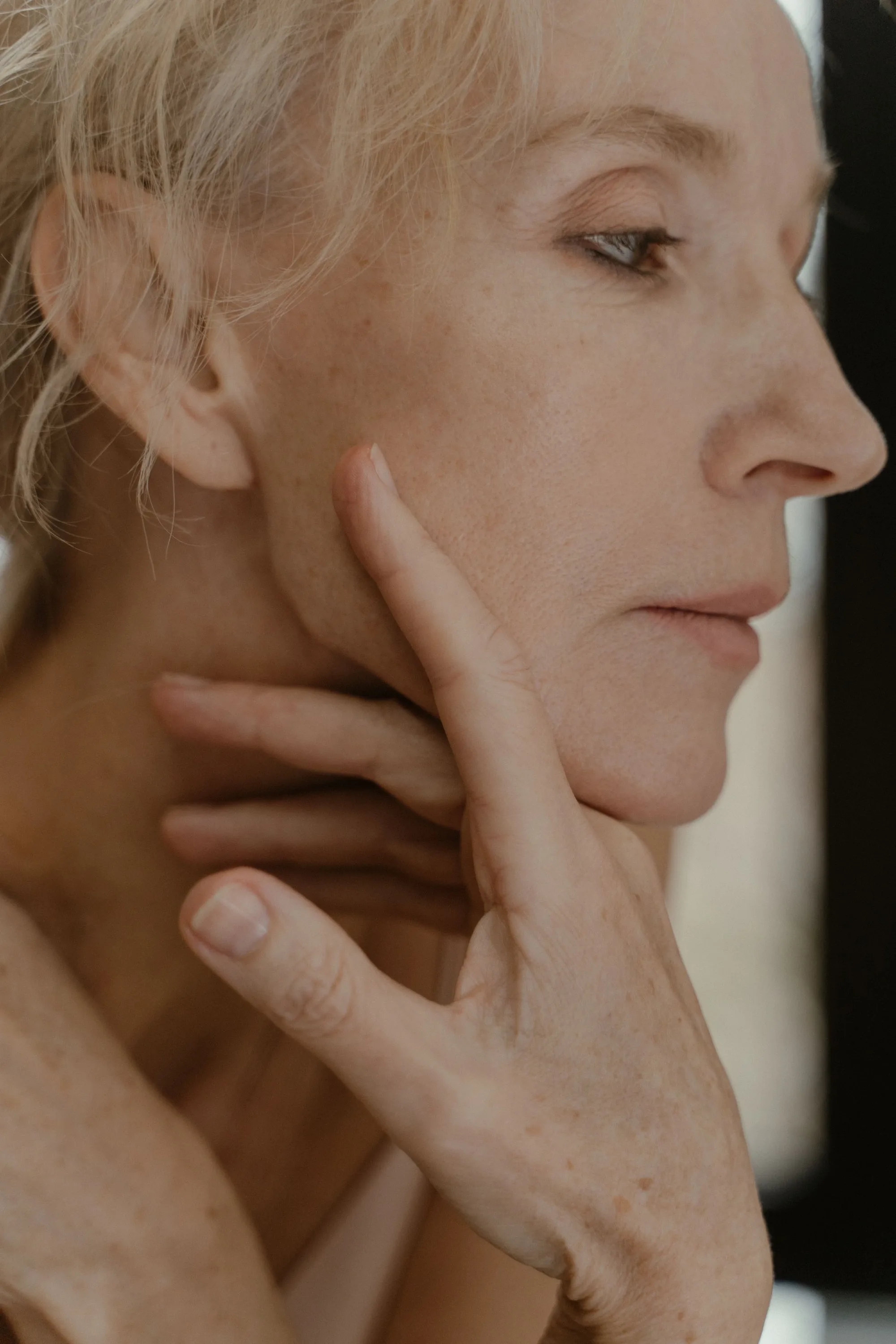
Nobody really warns you about this bit.
You expect the hot flushes. Maybe the mood swings, the sleep issues, the classic list you read about years before you actually hit perimenopause. What catches most women off guard is the skin.
It's often one of the first signs and one of the last things anyone talks about.
What's actually happening to your skin
Perimenopause brings a drop in oestrogen, and oestrogen does a lot more for your skin than most of us realise. It supports collagen production, keeps skin hydrated, and helps maintain that firmness and bounce we associate with younger-looking skin. As levels fluctuate and decline, it's common to notice:
Skin feeling drier, even if it never used to be
A loss of firmness or elasticity, sometimes appearing quite suddenly
Fine lines becoming more noticeable, particularly around the eyes and mouth
Breakouts returning, often along the jawline, in a way that feels unfair after years of clear skin
Dullness, or skin that just doesn't look as "awake" as it used to
If any of that sounds familiar, you're not imagining it, and you're definitely not alone. This is one of the most common things I hear from clients walking through the door.
Why this stage deserves its own approach
A lot of skincare advice out there is generic - the same routine and the same products regardless of what's actually going on underneath the surface. But perimenopausal skin has different needs to skin in your 20s or 30s. It needs more support for hydration and barrier function, more encouragement for collagen production, and often a gentler touch overall, since skin can become more reactive during this stage too.
This is genuinely where I love working. Having gone through this myself, I understand it from the inside, not just the treatment room side — which shapes every consultation and treatment plan I put together.
What tends to help
Every treatment plan should start with a proper conversation, not a one-size-fits-all package. But in general, the areas that make the biggest difference for perimenopausal skin are:
Hydration, from within the skin, not just on top of it. Skin boosters work beneath the surface to restore hydration where it's been lost, rather than sitting on the skin the way a moisturiser does. For a lot of clients, this is the treatment that makes the most visible difference to overall skin quality.
Encouraging your skin's own collagen production. Treatments like microneedling work by stimulating your skin's natural repair process, which helps rebuild the collagen and elastin that decline during this stage. It's a slower, more natural route to firmer, stronger skin rather than an instant fix — but often a more sustainable one.
Softening expression lines, without losing your expression. For some clients, anti-wrinkle injections are part of the picture too, precisely placed to soften lines while keeping your face looking like you — not "done."
A plan, not just a product. Honestly, the biggest difference isn't any single treatment. It's having someone build a plan around what your skin actually needs at this stage, rather than guessing with off-the-shelf products.
You don't need to just put up with it
This is the bit I really want you to take away: however your skin is changing right now, there are things that genuinely help and you don't have to figure it out alone or just accept it as "part of getting older."
If you're noticing any of this in your own skin, the best next step is simply a conversation. No pressure, no upsell, just an honest chat about what's going on and what might help.
Book you're free consultation here > http://bit.ly/44UKr3n
I'll take a proper look at your skin, talk through what you're noticing, and put together a plan that's actually built around you - not a generic checklist.