
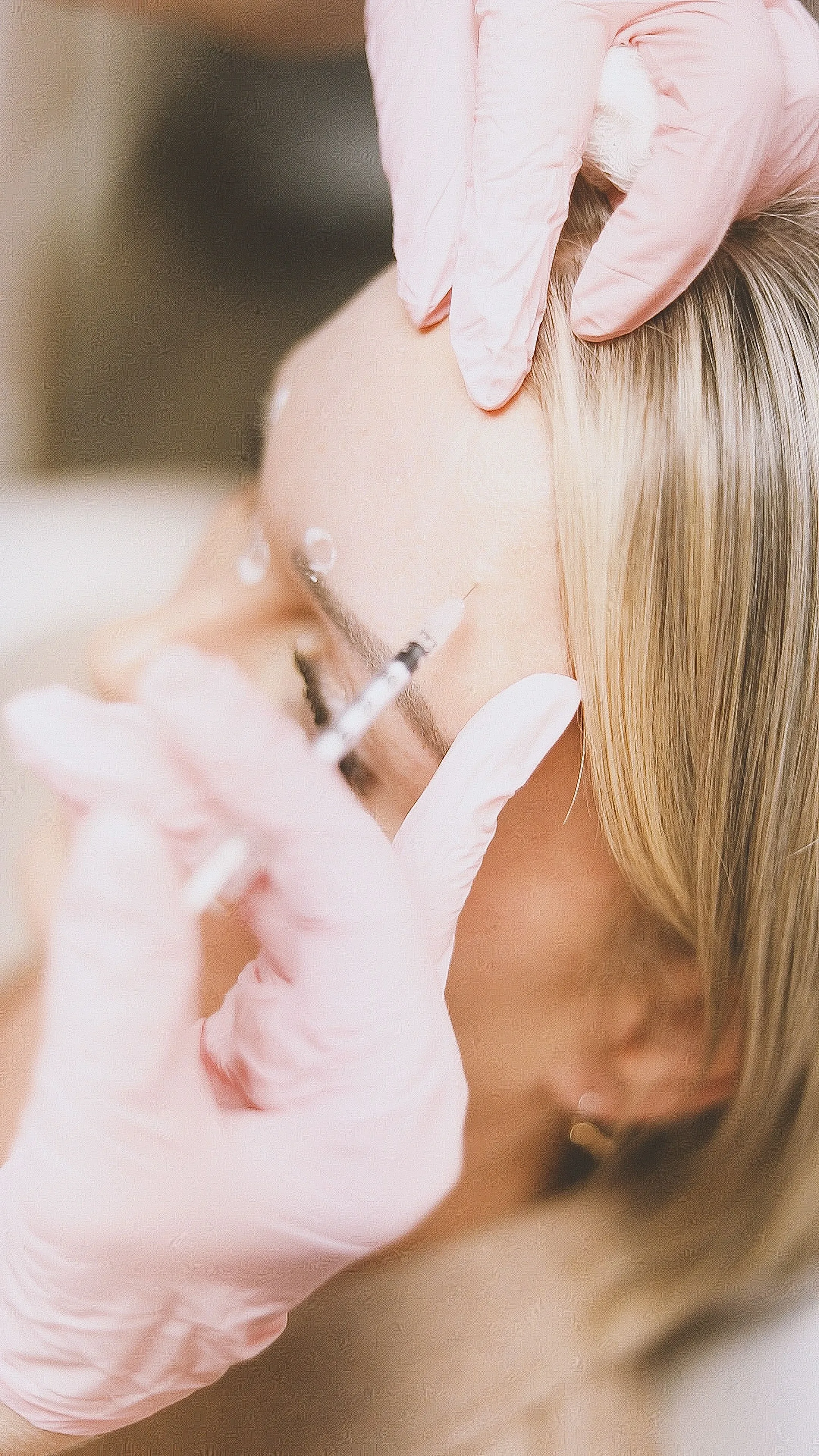
I get asked some version of this question in almost every consultation: "Okay, but what should I actually start with?"
Fair question. Between skin boosters, Botox, polynucleotides, microneedling and chemical peels, it's a lot to take in — especially when half of Instagram is telling you that you need all of them, immediately, forever. You don't.
So I wanted to put together one straightforward guide to the five treatments I recommend most often at Novauria, what each one actually does, who it suits, and how they fit together into a plan that makes sense for your skin — not just your feed.
Botox (Anti-Wrinkle Treatment)
Let's start with the one everyone's heard of, because it's still the most misunderstood.
Botox relaxes the small muscles responsible for expression lines — think forehead lines, frown lines between the brows, and crow's feet. Done well, it doesn't freeze your face; it softens the lines that come from repeated movement, so you look like you, just less tired and less creased.
It's a quick appointment — no downtime, results building over 1–2 weeks, lasting roughly 3–4 months. It's also genuinely preventative: starting earlier (even in your late 20s or 30s) can slow the lines from setting in permanently, which is why I see a real mix of ages in for this one.
Skin Boosters
Skin boosters are injectable hyaluronic acid, but unlike filler, they're not designed to add volume or reshape anything. They're spread finely through the skin to improve hydration, texture, and elasticity from within — think of it as deep, long-lasting hydration rather than a "fix."
This is the treatment I recommend for skin that looks tired, dehydrated, or just lacklustre, even if nothing is technically "wrong." It's brilliant under the eyes, on the neck and décolletage, and anywhere skin has lost that bounce. Results build gradually over a course, and the glow it leaves behind is honestly one of my favourite transformations to see.
Polynucleotides
If skin boosters are about hydration, polynucleotides are about repair. They're derived from purified DNA fragments (usually from salmon) that signal your skin's cells to regenerate, calm inflammation, and rebuild collagen — which makes them brilliant for compromised, thinning, or ageing skin, and for areas that scar or heal poorly.
I use them a lot around the under-eyes, on acne scarring, and on skin that's been through it — sun damage, breakouts, general wear and tear. They're not a filler, and they're not really a hydrator either; they're their own category, and for the right skin, the results genuinely surprise people.
Microneedling
Microneedling creates thousands of tiny, controlled punctures in the skin, which triggers your body's own repair response — more collagen, better texture, and improved absorption of whatever active you pair it with (hyaluronic acid, polynucleotides, brightening serums, and so on).
It's one of the most versatile treatments I offer because it flexes to what your skin needs: acne scarring, pigmentation, fine lines, general texture and tone. There's some downtime — expect redness for a day or two — but it's minimal for how much it delivers, and it's a treatment that rewards consistency more than any other on this list.
Chemical Peels
Peels use a controlled chemical exfoliant to remove the outer, dulled layers of skin and speed up cell turnover. Depending on the strength, they can address anything from dullness and congestion to pigmentation and breakout-prone skin.
I've been training in this over the past year because I wanted a treatment I could offer that works brilliantly on its own, and even better layered into a plan with the treatments above — particularly for texture, pigmentation, and that "my skin just looks flat" feeling that boosters and injectables alone don't always fix.
So, Which One Do You Actually Need?
Genuinely — it depends on your skin, not on what's trending. As a rough guide:
Tired, dehydrated, lacklustre skin → start with skin boosters. Thinning, scarred, or compromised skin → polynucleotides. Texture, pigmentation, or acne scarring → microneedling, often paired with peels or polynucleotides. Dullness and congestion → chemical peels. Expression lines → Botox, at any stage.
The treatments on this list aren't competing with each other — most of my clients end up on a plan that combines two or three of them over time, built around what their skin actually needs season to season. That's the bit I love most about consultations: it's never one-size-fits-all, and it shouldn't be.
If you're not sure where to start, that's what the consultation is for — no pressure, no upsell, just an honest look at your skin and a plan that makes sense.
Ready to talk it through? Book a consultation and let's figure out your starting point.